Observability is crucial for understanding complex cloud-native environments and improving their management.

Observability has become more critical in recent years, as cloud native environments have become more complex and the potential root causes of a failure or anomaly have become more difficult to identify. As teams begin to collect and work with observability data, they also realize its benefits for the business, not just for IT.
But what is observability? Why is it important and how can it really help organizations? Jan set blog of Atentus we explain it.
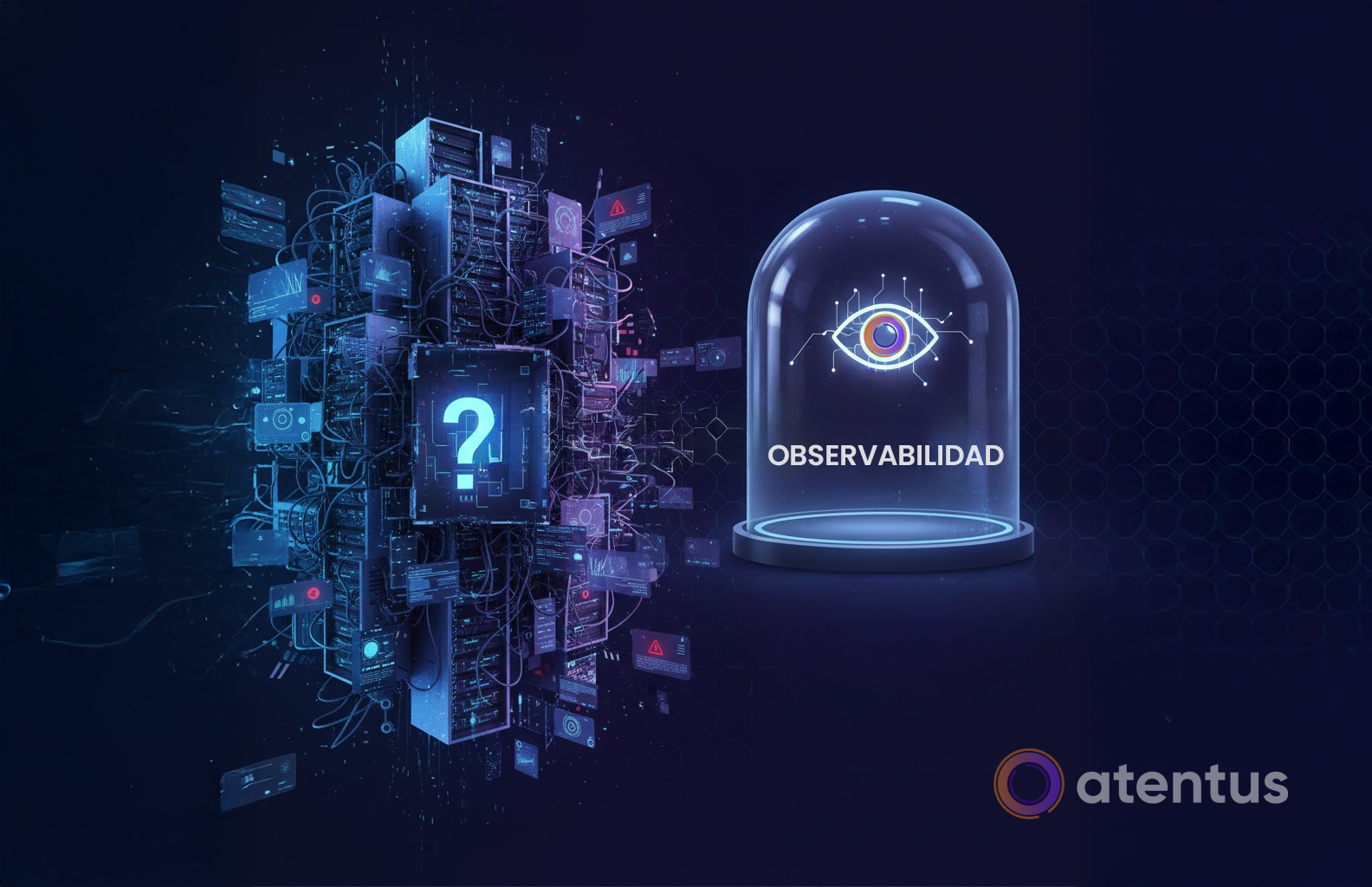
Observability is a concept used in the field of computer science and software engineering to describe the ability to understand and measure the internal state of a complex system through its external signals. The more observable a system is, the faster and more accurately it can navigate from an identified performance problem to its root cause, without additional testing or coding.
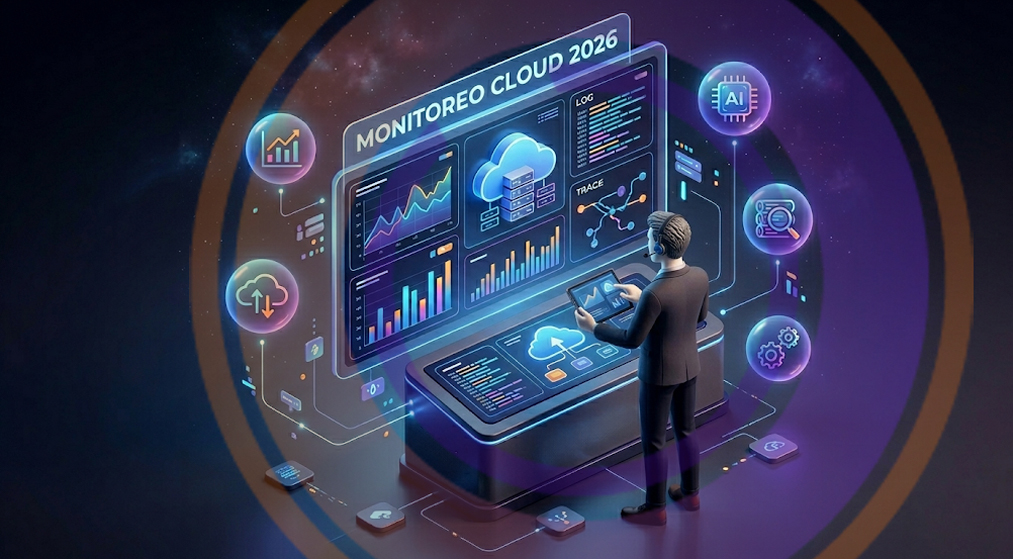
Observability involves the collection, analysis and visualization of data relevant to understanding the operation of a system. This includes capturing metrics, logs and event traces to be able to monitor and diagnose the system in case of problems or to obtain valuable information about its performance.
The goal of observability is to understand what is happening in all of these environments and between technologies, so that you can detect and solve problems to maintain the efficiency and reliability of your systems and the satisfaction of your customers.
Monitoring and observability are different concepts that depend on each other.
Specifically, monitoring is the act of observing the performance of a system over time. Monitoring tools collect and analyze system data and translate it into actionable information. Crucially, monitoring technologies, such as application performance monitoring (APM), can tell you if a system is up or down or if there is a problem with application performance. Monitoring data aggregation and correlation can also help you make broader inferences about the system. Load time, for example, can tell developers something about the user experience of a website or application.
Observability, on the other hand, is a measure of how well the system's internal states can be inferred from knowledge of its external outputs. It uses the data and information that monitoring produces to provide a holistic understanding of your system, including its health and performance. The observability of your system, then, depends in part on how well your monitoring metrics can interpret your system's performance indicators.
Another important difference is that monitoring requires you to know what is important to monitor beforehand. Observability allows you to determine what is important by observing how the system works over time and asking relevant questions about it.
In business environments, observability helps cross-functional teams understand and answer specific questions about what's happening in highly distributed systems. Observability allows you to understand what's slow or isn't working and what needs to be done to improve performance. With an observability solution in place, teams can receive alerts about problems and proactively resolve them before they affect users.
Because modern cloud environments are dynamic and constantly changing in scale and complexity, most problems are not known or monitored. Observability addresses this common problem of “unknown unknowns”, allowing you to continuously and automatically understand new types of problems as they arise.
From Atentus we always explain that the value of observability doesn't stop at IT use cases. Once you start collecting and analyzing observability data, you have an invaluable window into the business impact of your digital services. This visibility allows you to optimize conversions, validate that software versions meet business objectives, measure the results of user experience SLOs, and prioritize business decisions based on what matters most.
When an observability solution also analyzes user experience data through synthetic and real user monitoring, it can discover problems before its users and design better user experiences based on real and immediate feedback.
Observability offers a number of key benefits in the field of computer science and software engineering. Some of these benefits include: Faster diagnosis and resolution of problems. Observability allows problems to be identified and diagnosed in real time. By collecting and analyzing relevant data, such as metrics and logs, anomalies and unusual behavior patterns can be detected.
If you've read about observability, you probably know that collecting measurements from distributed records, metrics, and follow-ups are the three key pillars for success. However, looking at the raw telemetry of backend applications alone doesn't provide a complete picture of how your systems are behaving.
Neglecting the front-end perspective potentially distorts or even misrepresents the full picture of how your applications and infrastructure are performing in the real world for real users. Expanding the three-pillar approach, IT teams must increase telemetry collection with user experience data to eliminate blind spots:
To achieve observability, you need the right tools in your systems and applications to collect the right telemetry data. You can create an observable system by creating your own tools, using open source software, or our solution Atentus Observability, which is the most robust on the market. There are generally four components involved in implementing observability:
Instrumentation: These are measurement tools that collect telemetry data from a container, service, application, host, and any other component of your system, allowing visibility across your infrastructure.
Data correlation: Telemetry data collected from across your system is processed and correlated, creating context and allowing automated or personalized data curation for time series visualizations.
Incident response: Incident management and automation technologies are intended to provide data on interruptions to the right people and teams based on on-call schedules and technical skills.
AIOps: Machine learning models are used to automatically aggregate, correlate, and prioritize incident data, allowing you to filter alert noise, detect problems that may affect the system, and accelerate incident response when they do.
Observability is used by different roles and teams in the field of computer science and software engineering. Some of the primary users of observability include:
Software development teams: Developers use observability to understand how their code works in production. It allows them to obtain information about the performance, efficiency and behavior of applications in real time. This helps them identify and fix problems faster and more efficiently.
Operations teams (DevOps): Operations teams use observability to monitor and manage systems in production. It helps them detect and diagnose problems, such as service failures, bottlenecks, or performance degradation. It also allows them to make informed decisions about scalability and system optimization.
Quality Control (QA) Teams: Quality control teams use observability to evaluate the performance and stability of applications during testing. It helps them identify problems earlier and assess the impact of changes on system performance. This helps to improve the quality and reliability of applications.
Safety equipment: Security teams use observability to monitor and detect potential threats and cyberattacks. It allows them to analyze traffic, logs, and metrics to identify suspicious patterns or anomalous behavior. This helps strengthen system security and prevent unwanted intrusions.
Data analysis equipment: Analysis teams use observability to collect and analyze data about system behavior and user interactions. This allows them to gain valuable information to make informed business decisions, identify usage patterns and optimize the user experience.
Atentus offers the most complete observability service, where you can monitor, record and track all the components of a digital channel, to achieve an integrated and properly managed digital ecosystem. In addition, application and infrastructure data are collected and analyzed to understand how they work internally and to receive alerts in order to resolve unavailability or channel performance problems.
The data obtained from the monitoring is collected for a purer, cleaner and easier analysis. All this data is visualized in custom-made dashboards for a properly managed digital ecosystem and quick and effective decision-making for the business.
Do you want to implement Observability in your company? Request a free demo here.




























%20vs%20Monitoreo%20Sint%C3%A9tico.avif)